
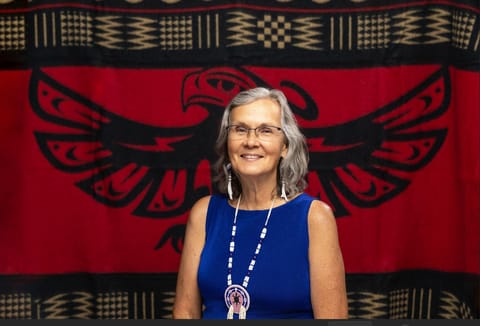
How a South Seattle Doctor Bridges Indigenous and Western Medical Practices

Before Western medicine was established, Indigenous tribes treated their illnesses with native plants they foraged. These practices were rooted in experienced science and held significant ties to culture for tribes.
However, recent news and research have shown that Western medicine often exploits Indigenous medicine, adopting traditional plant-medicine findings and claiming it as its own.
One family medicine physician in South Seattle stands as a bridge between Indigenous plant medicine and its Western counterpart.
Dr. Terry Maresca is one of the few Indigenous physicians in Seattle and currently serves as teaching faculty at the Seattle Indian Health Board, Puyallup Tribal Health, and the University of Washington. Alongside allopathic, or Western medicine, Maresca teaches her physicians-in-training the Indigenous practices of plant medicine, seed saving, and food revitalization.
“We have a responsibility: Health of the land is equal to health of the people,” Maresca said, “And it’s important to the people we serve because a lot of them want to stay anchored to their traditions.”
Maresca is originally from the Kanien’keh tribe, a Mohawk tribal community that is now on the Canadian side of the border. Her relationship with plant medicine and the natural world started when she was a child. At a young age, she learned about what it means to have a responsibility to the natural world.
“I think my exposure started from how our community teaches young people to think about relationships in general,” Maresca said, “Relationship to earth, to all things living, all of our world, to all things that make us live.”
And when it came to medicinal practices in the home, she saw how her own family knew how to take care of common illnesses with plants from the natural world around them. She remembers how her own grandmother was especially connected to growing and cultivating from their family’s garden.
“Being a grower, being outside, having that responsibility—just helped shift my thoughts of what I thought was a normal piece of medical care, until going into Western medicine training,” she said.
Maresca said it was a shock to her that Indigenous plant medicine was not a part of her medical school training. Because she attended medical school in a large city filled with so much culture, she expected to learn about different types of medicine and how different cultures approach healthcare.
“Isn’t that what you’re supposed to do or ask people? Do [different medicines] interact? Do they work synergistically?” Maresca said. “Shouldn’t we know some of that?”
Today, she strives to combat this lack in medical education by teaching her own physician residents about tribal culture and traditional Indigenous medicine. Her teachings consist of passing on knowledge about different plants Indigenous patients might use for different illnesses, how to find these plants, and the culture of medicine within Indigenous communities.
Much of the Indigenous medicine Maresca teaches and provides is preventative medicine or medicine that might help with common conditions such as the flu, insomnia, pain, or blood sugar control. She also focuses on building cultural trust, understanding that reconnection to Indigenous culture is important for many of her patients.
For Maresca’s patients, medicine extends beyond the diagnosis and into the Indigenous natural, spiritual, and relational worlds.
“Some people may not have the opportunity to be with their birth family or elders, so there’s a real hunger for that in terms of their own identity and own self-efficacy,” she said, “It’s important for them to be able to make choices and feel like they’re doing something positive for themselves rather than being dependent on a strictly Western mode.”
Maresca herself will even harvest and grow some of the plants she provides as alternatives for her patients. She teaches her residents how to tend and grow these medicines, as the Seattle Indian Health Board clinic has its own patch of land for gardening next to its clinic. Residents also learn how to spot these medicinal plants on harvesting walks Maresca leads—plants out in the wild or even right in South Seattle in the International District.
“It’s spring, and a couple of weeks ago we were out harvesting with one of my trainees,” she said, “And there were first nettles. … They are one of the indicator plants of spring.”
Maresca states that nettle is a nutritive food, with a fair amount of beneficial salts like calcium, magnesium, and potassium. As a result, nettle can mimic calcium-channel blockers. It acts as a natural diuretic and vasodilator, and can be similar to popular medicines such as amlodipine, which many patients take for high blood pressure.
“Folks who are starting to run a little bit high in their [blood pressure], or who may already be on prescription medicine who may need a little adjunctive help, [nettle] can be helpful there,” Maresca said.
Nettle can also help with the urinary system for patients who need help flushing their system out, or even some degree of allergy control, Maresca states. A plant medicine like nettle doesn’t replace allopathic medicine. Rather, it expands the definition of medicine, offering a more holistic approach for patients who want more humanism and connection in their medical experiences.
Maresca hopes that future physicians will be able to learn more about how Western science interacts with Indigenous plant medicine. From a cultural standpoint, she hopes physicians will be able to understand the importance of the natural world for their Indigenous patients. But from a medicinal standpoint, Maresca states that many Western medicines also interact and metabolize with Indigenous plant medicine. It is important for physicians to understand how these toxicities can happen, and to watch carefully for these interactions in their patients.
Within her own community, Maresca’s hope is that tribes can become allies for each other in Washington — allowing reclamation, land preservation, and access to the medicines they need.
“We have responsibility there, how to be a good regional citizen for Indigenous communities who are trying to do that work,” Maresca said, “That’s what I hope for, that our physician residents are going to become safer, approachable people, and have knowledge of how our systems work to be able to get people what they need.”
No Paywalls. No Billionaires. Just Us.
We're building a newsroom rooted in community, not corporate backing. Help us raise funds to hire our first-ever full-time reporter and grow our capacity to cover the South End. Donate today.
