
OPINION | Seattle's World Cup Plans Reach the Waterfront. Why Not the South End?

It's hard to be a small, immigrant, or BIPOC-owned business in the South End.
From break-ins to permitting to creating a viable business plan, the technical and practical barriers can be daunting, even for the most established of business owners.
That's where we come in. We are the team behind the Essential Southeast Seattle (ESES) Collective. We started as a group of five community-based business associations that formed an online marketplace during COVID. Our goal was to help people make ends meet during the turbulent time in the local business sphere.
You may not see us or know us, but the small businesses and their owners along Rainier Avenue, Othello, Mount Baker, and Beacon Hill most definitely do. Every week of the year, our small team of outreach specialists head out into the South End to connect with over 750 brick-and-mortar businesses. We offer digital literacy assistance, help people find a commercial space, or navigate applications for city programs like the Storefront Repair Fund and so much more.
Considering the South End has one of the most diverse business and food scenes in the city, it's very fulfilling work.
What isn't fulfilling is seeing this historically redlined, yet culturally rich, area and its businesses fend and scramble to cash in on a once-in-a-lifetime opportunity: the FIFA World Cup. Businesses that could really benefit from the inflow of tourists have virtually been forgotten, left out, or ignored from an event that is celebrated for bringing together nations from around the world.
All attention, planning, funding, promotion, and resources have been centered in and focused on the Seattle Center, downtown, waterfront, and Pioneer Square district. The city program, World Cup Small Business Initiative, for example, was only geared toward business sectors closest to the stadiums.
At the beginning of 2025, grant programs like those from the Seattle Metro Chamber offered funds to support events with a caveat — they had to be outside city limits. When we asked about grants for our neighborhoods, we were told more opportunities would come to us in 2026. We have not seen such investments offered yet. The primary way the city is promoting small businesses in Seattle is through their SEA&WIN mobile game, which is difficult to navigate and features very few small businesses, with only a couple in the South End. (There are actually more businesses featured in Bremerton than south of I-90 in Seattle.) Our efforts to collaborate with this project and others were unsuccessful.
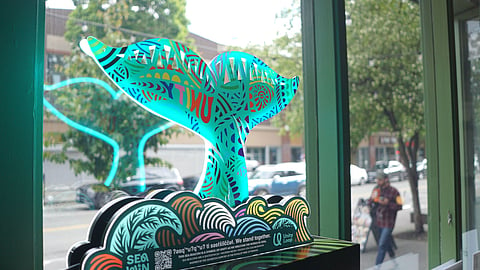
You don't have to look far to see the results. While many businesses in areas close to the stadiums like the CID, Pioneer Square, and Capitol Hill don FIFA-branded whale posters on their windows, you'll see none of them in the South End. A guide for FIFA fans just barely broaches the Central District, neglecting everything south.
Why shouldn't the South End be included and take advantage of this moment? The light rail runs right through our neighborhoods. But tourists on the way to their downtown lodgings will have little indication of the vast recreational, food, and retail experiences they are passing through. We are, after all, home to Seattle's international diaspora communities, and our businesses reflect that, as we all know from the many cuisines featured each year in the one-and-only Plate of Nations food festival. It makes perfect sense to invest resources here: Our business culture is thriving and has so much to offer in spite of historical underinvestment.
While FIFA planning has made efforts to usher tourists into different parts of Seattle, our neighborhood can expect something else entirely — a local South End social service provider told us they are expecting an increase of unhoused people during the World Cup games. For an area already lacking in resources, it only adds to the struggle of small business owners.
So we are left wondering, who made all these fine guides and lists that left out the South End? Who decided where money would be invested? Where's the rest of the funds? And why wasn't the South End promoted like other neighborhoods ahead of the World Cup games? In 2026, after everything, how can we still be this invisible to the rest of the city?
We may never get answers, but at least we are speaking up for the small businesses of South Seattle. And if you're still wondering who is streaming the games in our neck of the woods, well, we've got you covered there.
The South Seattle Emerald is committed to holding space for a variety of viewpoints within our community, with the understanding that differing perspectives do not negate mutual respect amongst community members.
The opinions, beliefs, and viewpoints expressed by the contributors on this website do not necessarily reflect the opinions, beliefs, and viewpoints of the Emerald or official policies of the Emerald.
Angela Castañeda is the executive director of Beacon Business Alliance.
Flora Tempel is the executive director of Mt. Baker Hub Alliance.
Kate Bond is the executive director of Rainier Avenue Business Coalition.
Sarah Valenta is the director of community and business development at Homesight.
Together, these organizations form the ESES Collective, working together to develop small businesses in the South Seattle community.
No Paywalls. No Billionaires. Just Us.
We're building a newsroom rooted in community, not corporate backing. Help us raise funds to hire our first-ever full-time reporter and grow our capacity to cover the South End. Donate today.
