
Black and Brown Youth in the South End Find Their Voices Through Spoken-Word Poetry

Elevate, an annual Seattle Theatre Group program, offers Black and Brown youth the opportunity to express themselves through spoken-word poetry. The 2026 program, which began in March, brought together 12 participants for weekly, in-person writing sessions. The writing sessions prepare the participants, between 14 and 20 years old, to take the stage in a performance on June 4.
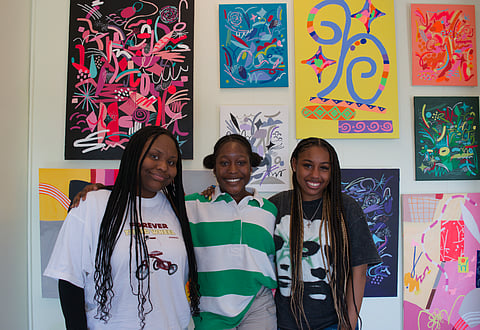
This year, three young South End women — Sinatra Kirvin, Madison Bryant, and Harlem Yarbrough — participated in Elevate, which offered them space for self-reflection and allowed them to use writing as a way to give voice to their communities. Before Bryant, Yarbrough, and Kirvin will share their works on June 4, they spoke to the Emerald about what they’ve learned about the power of the spoken word.
Finding Their Freedom
Bryant, 20, has been in the group for seven years. Being in the group has allowed her to interact with like-minded people and create friendships. Bryant mentioned that in Elevate, they intend to speak about their communities through a personal understanding of themselves. Every piece she writes includes an intimate detail, which means she sometimes talks about topics that might be new to her peers.
As a Black student in a predominantly white private school, Bryant wanted to share what that experience was like “because I feel like in certain circumstances, I’m not able to relate to either side because I don't have all these experiences as one group, but I don't have all these experiences as another group.”
As a newer member to Elevate, Kirvin considers herself shy, having previously struggled with finding the right community. Elevate provided a safe space, allowing her to hear different voices and to invest in something she is passionate about.
When Yarbrough thinks of Elevate, she thinks of freedom. Yarbrough has participated in Elevate for five years, expressing herself and speaking about topics she finds important. A self-identified social-justice warrior, she plays around with literary devices to add depth to a piece.
“For me, joining Elevate is always the highlight of my year because I get to write about things that matter to me and be able to share common interests, but also [have] the same experiences with my peers,” said Yarbrough.
The Meaning Behind the Words
For Yarbrough, spoken word can be summed up in three words: empowerment, freedom, and community.
“I’d say, it's my outlet to be able to truly express myself about my opinions on what’s happening in the world, but also a way for me to be able to articulate what's going on with me, [but without] having a conversation,” said Yarbrough.
To Kirvin, writing feels good, a way to let out emotions, but she finds a different comfort when it comes to being able to say what hasn't been said. She acknowledged the power that comes from spoken word, and the requirement she found in speaking sincerely, because someone who’s listening could be going through similar situations, which can give the experience greater purpose.
“It’s different when you’re writing and then also when you’re speaking. There's power in both,” said Kirvin.
One of Kirvin’s main themes is vulnerability. Last year, she wrote and performed a piece on the passing of her mother. It was the hardest piece she’s ever done. Although she felt angry writing it, she found release in being able to express those emotions — to be vulnerable — and to know other people might feel the same.
The Power in Being a Performer
Bryant considers herself to be a big talker, so the performance aspect of spoken word comes naturally. The hardest part, she said, is picking the correct moments and words to describe a feeling. The writing process doesn't start until she begins speaking out loud, which makes it easier to understand the words on the page and grasp the overall concept she wants the audience to experience.
“Anytime I’m performing, it’s just about how much I want my personality to show, and how serious I need to be,” said Bryant.
In a poem Yarbrough wrote called “Immigration,” she discussed the struggles Black people can experience by illustrating immigration’s history. For the poem, she had to figure out how to make the piece flow using the power of her voice and her body language. It was a five-minute piece, and she felt the poem’s weight while reciting it on a stage.
“Finding the balance between going up and down with how the emotions are and also having that touch of sarcasm or funny moments helps, because it adds a moment of, ‘Oh, my god, that was funny,’ and then you could pull them back into, ’No, this isn’t funny.’ So it just keeps the audience engaged,” said Yarbrough.
Figuring Out Who They Already Were
Kirvin was scared to join Elevate, but joining helped her meet many creative people. Despite being a quiet person, she’s worked on finding her own voice and exploring new performance skills.
“I didn’t like speaking. I tried to avoid being called on, but here it really pushes you to get out of your comfort zone, but it also pushes you to know what you’re capable of,” said Kirvin.
Bryant now considers herself to be very outgoing.
“I feel like Elevate literally allowed me to accept myself, speak out, and become the full version of myself because now I’m able to use my voice in a way that other people can't. I’m able to speak my mind without feeling the shame of being different,” said Bryant.
For Yarbrough, Elevate gave her more self-confidence.
“Elevate helps solidify me figuring out who I already was,” said Yarbrough.
No Paywalls. No Billionaires. Just Us.
We're building a newsroom rooted in community, not corporate backing. Help us raise funds to hire our first-ever full-time reporter and grow our capacity to cover the South End. Donate today.
