
Preparing the Duwamish Valley for Future Flooding

Rivers have a habit of rebelling against their channels. In December 2022, a few dozen families in South Park suffered the brunt of such a rebellion. Heavy rain and low atmospheric pressure combined with a king tide to raise the levels of the Duwamish until the swelling river spilled its banks, flooding some homes and businesses and backing up sewage into still more. But the water that sloshed into streets and homes, with all the traumas and displacements it brought, was but a minor foreshadowing of the future flooding that climate change will bring to the Duwamish Valley as storms surge and seas rise an estimated 3 feet over the next century.
"The king tides of today will be our everyday high tides in the near future," Chandler Countryman, a resilience and adaptation specialist with Washington Sea Grant, told the Emerald in an email.
In the decades ahead, something like the December 2022 flood could become a regular occurrence for South Park, with the potential to recur two or three times a year, said Robin Schwartz, the advocacy and community resilience manager for the Duwamish River Community Coalition (DRCC), a nonprofit focused on Duwamish River pollution and other environmental injustices the community faces. So for families that live near the river to avoid displacement, she says, much work must be done to ensure that the communities of the valley are as prepared as possible for what waters may come. The recent series of atmospheric rivers that have prompted flooding throughout King County and Western Washington — even though the Duwamish hasn't been particularly hard-hit — is a preview of what the valley may one day regularly endure during the wet season.
Seattle Public Utilities (SPU) is the agency at the front of ensuring the community is protected. To give dedicated focus to that work, SPU created a new "Duwamish Valley Water Resilience" program this past summer and hired Alberto Rodríguez to lead it. Rodríguez has spent the last decade and a half working on environmental justice issues in Seattle, with a focus on South Park and the Duwamish Valley.
Even before the program launched, SPU had completed the South Park Pump Station, which pushes excess water through the sewers into the river when high tides otherwise prevent the system from draining. To prevent backups, it has also installed 24 grinder pumps in 24 homes that force drainage out into the sewer.
The DRCC played a central role in pushing SPU to install these pumps before the 2022 flood ever happened. Soon after Schwartz and her then-husband moved into their South Park house on South Kenyon Street almost 20 years ago, a backup flooded their home. And though her ex-husband installed a backflow valve to prevent such flooding from happening again in the future, Schwartz eventually realized it wasn't an isolated issue affecting her home. "It was happening all up and down the street," she said, "and had been happening."
So, around five years ago, DRCC started pressuring SPU to do something about it, and the utility had begun to install the first grinder pumps at seven houses when the flood happened. "They had people on the ground that morning," Schwartz said. If that hadn't been the case, she suspects the response to the flood may have been much different and, likely, much slower.
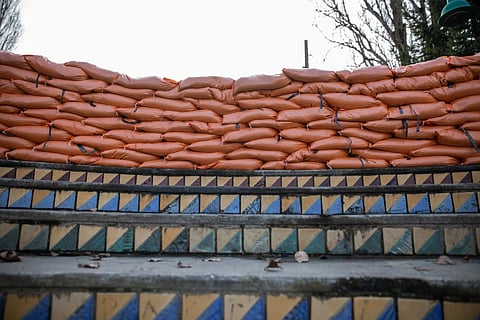
Beyond the pump station and the individual grinder pumps, SPU has improved drainage throughout South Park and installed a temporary sandbag berm that goes up during king tide season — which occurs every November, December, and January when the moon is slightly closer to the Earth than it is the rest of the year. (The next series of king tides will occur from Jan. 3–6, 2026, and the National Oceanic and Atmospheric Administration currently predicts a 20% to 30% chance of coastal flooding in Seattle on those days.)
SPU has also improved its flood preparedness and response plans so it can offer the community more immediate and robust support. The improvements have included installing the temporary sandbag berm, identifying where to deploy mobile pumps if the river overtops, hosting workshops for and mailing information to residents and businesses about preparing for wet weather, and convening staff from SPU and King County to practice different scenarios to ensure they're ready for a rapid response. Seattle Parks and Recreation also has plans underway to construct a new park along the river that, much like the Duwamish River People's Park, could include a floodable area that helps lessen some of the risk of waters entering the community itself.
These improvements have already made a noticeable difference: Last December, Schwartz noticed some water in the industrial area of South Park and says it's likely the river would have overtopped its banks again had the sandbag wall not been in place. Still, both Schwartz and Rodriguez recognize that much more remains to be done to prepare for the heightened water levels of the future.
What exactly those solutions will be remains an open question. Rodríguez and the team he is growing at SPU are focused on finding those solutions. In the coming year, he intends to hire three more team members to support that work. "We have some potential ideas," Rodríguez said, including raising the elevation of street ends as well as elevating portions of the water quality facility currently being developed in South Park, which would provide additional protection against high water levels. "But this is not set in stone yet."
Much of what Rodríguez and SPU pursue will be informed by work that DRCC and its partners at the University of Washington have done for the past few years to understand community members' priorities for climate change and the other challenges facing the Duwamish Valley. "I'm a firm believer in not recreating the wheel, and honoring the time, the expertise, and the effort that the community has already put into telling us what they need," Rodríguez said.
Months before the 2022 flood, DRCC and its UW partners surveyed the community about their concerns to create the Seattle Assessment for Public Health Emergency Response (SASPER). In that report, 62% of households surveyed listed "environmental impacts" among their top three issues of concern, which put it above crime, cost of living, and housing affordability; 27% listed flooding as a hazard of high concern. If the survey had followed the flood instead of preceding it, said Rodríguez, "maybe that would have been different."
"The [Duwamish Valley] had a very strong preference for green infrastructure," said BJ Cummings, special projects adviser in UW's Department of Environmental and Occupational Health. They also had "a very strong sense of community cohesion and wanting to make sure that any and all solutions were led by community experts."
To support this community-led approach to flood adaptation, preparedness, and response, DRCC and UW have embarked on the Living With Water project. The final report from this project will be released early next year and include three main components: a review of existing flood-adaptation strategies, a vision for adaptation co-designed with community members, and an evaluation of these plans for equity.
While most of this work has affirmed what they found during the SASPER surveys, including the desire for nature-based solutions, it has also surprised Cummings in one major way: "There are a lot of people who have said, 'You know what, maybe I do need to move.'" This strategy, commonly referred to as "managed retreat," has come up as community members are thinking about what would be best for future generations — because while many strategies can manage flood risks in the short- and medium-term, those solutions may not be sufficient for the conditions 30, 50, or 100 years down the line.
Still, although it's a consideration, managed retreat is in many ways a last resort given the anti-displacement priority baked into the city's Duwamish Valley Action Plan. And even if it is pursued, community members have told Cummings and others that they'd simply want to move to another part of South Park that's a little farther from the river. It's also not something SPU could do on its own. "Managed retreat will require partnerships and collaboration with other city departments and with regional state and federal agencies," Rodriguez said.
Part of that challenge is simply the cost involved in buying up all the homes that would be left behind and constructing new ones for families to move into. After all, it accomplishes little for one household to leave their home by the river just for another to move in. Schwartz, who lives within blocks of the river, has started to lean closer to moving than she ever has before. But it's a complicated proposition and "a weird place to be in," she said. "I can't imagine selling my house to some poor sucker and being like, 'Oh, good luck.'"
For safety tips and resources for floods, visit the City's Flooding Safety and Response webpage. To receive emergency updates and resources on emergency preparedness, visit the City's Emergency Management webpage.
SPU's advice for residents: Always call 911 for life and safety emergencies. Call SPU's 24/7 Operations Response Center at 206-386-1800 for urgent drainage, wastewater, and drinking water issues.
And even if you don't live in the Duwamish Valley, you can "Adopt a Storm Drain" to help prevent local flooding during heavy rainfall by keeping the drain clear, which prevents water from pooling in streets.
The Emerald's environmental reporting is funded in part by the City of Seattle's Environmental Justice Fund.

No Paywalls. No Billionaires. Just Us.
We're building a newsroom rooted in community, not corporate backing. Help us raise funds to hire our first-ever full-time reporter and grow our capacity to cover the South End. Donate today.
