
Weekend Reads | Exercise as Treatment for Depression: Unpacking Data Biases
by Kevin Schofield
This weekend's read looks at the effect of exercise for people suffering from depression. Beyond prescriptions and therapy, many health experts have suggested a number of alternative ways to treat depression, including diet changes, getting more sunlight or outdoor time, and getting regular exercise. A group of researchers from Australia, Spain, and Denmark surveyed about 250 previous research reports on exercise and depression to try to understand what forms of exercise, if any, might be effective.
That turns out to be harder than you might imagine. Most of the prior research was "pairwise" studies: comparing a control group of people to people who also performed a specific kind of exercise — or, in some cases, performed it more or less intensely. And the pairs were all over the map.

To sort this out, they needed to do a "network meta-analysis" to try to tease out the larger set of relationships beyond the specific pairs that were studied. Doing so requires inferring transitive relationships: For example, if A is more effective than B, and B is more effective than C, then A is more effective than C. But it's far from that simple. Consider: If A is a little better than B, and C is a lot better than B, does that mean C is better than A — and if so, by how much and under what circumstances?
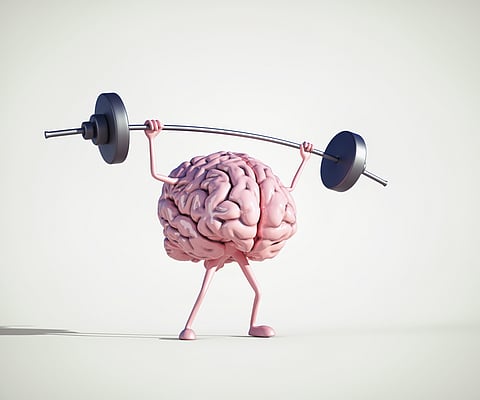
The short version of what they found in their meta-analysis was that exercise does have significant therapeutic benefits for those with depression, in some cases more than therapy or medication. Dancing topped the list, and walking or jogging wasn't far behind, with yoga, aerobic exercise, strength training, and tai chi also showing measurable results. The researchers also found that the intensity of the exercise mattered: the more intense, the more therapeutic value.
But there's a catch: The researchers also concluded that, despite there being about 250 studies to review, they had low confidence in the results of those studies. They spent the majority of their own report detailing all the reasons why the conclusions aren't very credible — and most of it comes down to possible bias in how the studies were done.
There are lots of potential sources of bias in scientific experiments, in the design, in how they are conducted, and in how the results are assessed. There is also "reporting bias": Studies with interesting results are more likely to be fully written up by researchers and submitted for publication. Likewise, there is "publication bias": Scientific journals are more likely to publish studies with positive results than ones with negative results, even if the negative results are important. So the published literature has a lot of interesting, positive results, but very little data on less interesting and negative results; so much so that we can't tell whether the published studies are truly representative of all of the research done and its results.
The researchers looked closely at all 250 of the studies and found that most of them showed risk of bias — not necessarily actual bias, but problems in how a study was conducted that could have introduced (as yet undetected) bias. In particular, they found that few of the studies were conducted completely "blind," in that either the participants, the staff, or the assessors of the outcomes knew what outcome they were looking for. That tends to lead to "expectancy bias," where it is more likely that people find the outcome they are looking for.
The potential bias, plus the fact that some of the forms of exercise had very few studies conducted, led the researchers to conclude that the results should be treated with low confidence. They weren't provably wrong, but there is a greater chance they might be wrong. For example, dancing seemed to have the greatest therapeutic value, but there were only three studies, and those were at risk of bias. Dancing may, in fact, be the best therapy, but there isn't enough solid data to conclude that yet.
And yet, there is enough to suggest that health professionals should be prescribing exercise to patients struggling with depression, especially those for whom therapy or medication have not helped. This is particularly important because, as the researchers point out, only 51% of people in high-income countries have access to traditional therapies to treat depression, and only 20% do in low-income countries. Exercise, if an effective treatment, would be cost-effective and easy to scale up. There is a lot more research to be done to understand how much exercise helps with depression (and in what forms), but it's a promising start.
Kevin Schofield is a freelance writer and publishes Seattle Paper Trail. Previously he worked for Microsoft, published Seattle City Council Insight, co-hosted the "Seattle News, Views and Brews" podcast, and raised two daughters as a single dad. He serves on the Board of Directors of Woodland Park Zoo, where he also volunteers.
Featured image via MikyR/Shutterstock.com.
Before you move on to the next story …
The South Seattle Emerald™ is brought to you by Rainmakers. Rainmakers give recurring gifts at any amount. With around 1,000 Rainmakers, the Emerald™ is truly community-driven local media. Help us keep BIPOC-led media free and accessible.
If just half of our readers signed up to give $6 a month, we wouldn't have to fundraise for the rest of the year. Small amounts make a difference.
We cannot do this work without you. Become a Rainmaker today!
F*** Fascism. Fund the Emerald.
Join us at The Royal Room for pancakes, community, and a morning that helps push back — all while supporting independent journalism in the South End. Get your tickets online today!
No Paywalls. No Billionaires. Just Us.
We're building a newsroom rooted in community, not corporate backing. Help us raise funds to hire our first-ever full-time reporter and grow our capacity to cover the South End. Donate today.
