
Washington Senate Passes Bill Regulating License Plate Reader Data

The Washington State Senate passed a bill on Wednesday, Feb. 5, to regulate the use of data collected by automated license plate readers (ALPR), including those made by Flock Safety, amid growing privacy and surveillance concerns. The vote was 40-9, and the bill now awaits approval by the House.
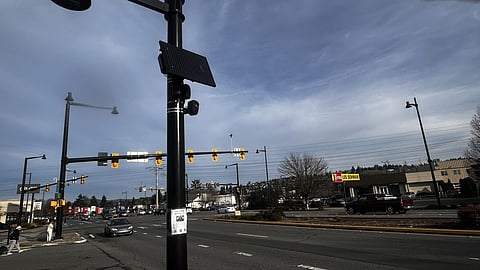
ALPRs are AI-powered cameras that capture and analyze still images of passing vehicles regardless of whether the driver is suspected of a crime. These cameras store details about a car's location, date, and time in addition to the car's make, model, color, and identifying features such as dents, roof racks, and bumper stickers.
Law enforcement agencies typically contract with third-party vendors for this technology. Flock Safety is the most commonly used vendor, but the City of Seattle uses Axon. The data is used to identify and recover stolen vehicles, locate missing persons, and assist in other criminal investigations. The technology isn't regulated by state law, leading to potential misuses and lapses in privacy protections and surveillance concerns.
"This location data is really sensitive," Tee Sannon, a technology policy program director at ACLU Washington, said before the vote. "It can be used to infer where people are going, track their movements, and we're really concerned about the weaponization of this data to target vulnerable groups, such as immigrants or people seeking reproductive or gender-affirming care."
Senate Bill 6002 aims to strengthen protections for data gathered from ALPRs by limiting how long the data is retained and restricting how it is used and shared.
"Right now, we're watching in real time as our privacy protections are eroded," Sen. Yasmin Trudeau, D-Tacoma, the bill's prime sponsor, said before the bill was passed. "We're seeing these companies sharing data willingly, with no sideboards, where it's being misused by our federal government and even our local government."
Redmond, Lynnwood, and Mercer Island police departments paused their ALPR use in late 2025 due to data security and privacy concerns. Police departments in cities like Renton, SeaTac, Tukwila, Kent, and Auburn use ALPR technology.
"I don't know if there is much of an appetite on the Renton City Council or in the mayor's office to pause the use of these Flock cameras," said Renton City Councilmember Carmen Rivera in an Instagram video, adding that main debates are about the benefits in addressing crime using this technology.
A report released by the University of Washington's Center of Human Rights in October 2025 concluded that weak regulations of ALPR-gathered data have led to immigration enforcement agencies accessing it, in some cases without the agency's knowledge. This conflicts with the Keep Working Washington Act, which prohibits the use of state resources for immigration enforcement.
"Our data is a commodity now and it is the one thing that we have that is the most valuable to huge tech companies," Trudeau said. "I think it is very important that we have a transparent way of knowing what's happening to our data."
Currently the bill prohibits the use of these cameras for immigration enforcement. If approved, they would not be allowed at or near schools, places of worship, courts, or food banks.
The bill would also require agencies to provide information about their ALPR usage, document any access to their systems, and prevent direct access. In addition, it would exempt this data from public records disclosure, following an incident in Texas where a woman who administered an abortion was tracked through ALPR cameras.
Debates over the bill include how long ALPR data should be retained and what limits should be on ALPR usage in felony investigations.
A recent amendment sets the retention period to 21 days. Advocates, however, want to lower it further. SPD currently retains the data for 90 days, the longest period in the state.
The proposed legislation would also allow cameras to track people with felony warrants or vehicles involved in a felony. Opponents of the bill want to lower this threshold to misdemeanors.
Websites like De-Flock document where Flock ALPR cameras are located.
Trudeau, who is Muslim and has witnessed nationwide security and privacy policy changes since 9/11, said these efforts have led to a lack of regulations about the technology being used.
"I don't know if government will ever catch up because of what we've accepted to this point in the face of swapping out privacy for security," Trudeau said.
No Paywalls. No Billionaires. Just Us.
We're building a newsroom rooted in community, not corporate backing. Help us raise funds to hire our first-ever full-time reporter and grow our capacity to cover the South End. Donate today.
