
OPINION | Seattle Says Police Accountability Is Complete. Victims' Families Know It Isn't.
Many times, I've gone back to the day, over 20 years ago, when my brother, Herbert Hightower Jr., was killed feet from our doorstep while experiencing a mental health crisis. He was the second of my siblings to become a victim of fatal gun violence. Only this time, it wasn't another young Black man at the other end of the barrel, but a Seattle police officer with a powerful union stacked against us. We struggled to pay for his funeral and burial, ultimately burying him in a grave that went unmarked for nearly a decade. Our family was left with no mental health care, no understanding of how the system worked or how to navigate it, and little community support.
Last month, the City of Seattle approved a new contract with the Seattle police union. Just weeks after 13 years of federal oversight came to an end, they landed on an agreement that pays cops more money with even less accountability. When the federal consent decree ended, some elected officials, including former Mayor Bruce Harrell, proclaimed we had a changed police force, despite data showing SPD killings continued to increase while the consent decree was in place.
It's hard to understand the sentiment that our police force has been reformed when considering the widespread police brutality towards anti-trans counter-protestors in May of 2025. Or Seattle police killings as recently as Dec. 2, when they shot and killed 29-year-old Christian Nelson and injured a bystander in South Seattle. Or two months prior, when Seattle police shot and killed 46-year-old Jack Paleli on Oct. 30. Both Nelson and Paleli appeared to have been in crisis when they were encountered by police.
There have also been scandals: police union leaders laughing at the victim they'd killed, an incident that gained national attention, and leaked photos of a fake tombstone of another victim used as decor in a SPD break room — all of it contradicting claims of a changed police force.
The Rise and Fall of the Seattle Affected Persons Program
Whether or not the police force has undergone a significant level of transformation, one thing is still clear: Victims of police violence and their families need financial and mental health-related support from the city.
I and so many others have felt the pain of not only the loss of our loved ones, on top of the lifelong trauma of surviving police brutality, but the lack of access to urgently needed support that would've created a pathway to some level of healing. The truth is, police violence does not end with the initial harm — it echoes through the very systems and policies our society maintains.
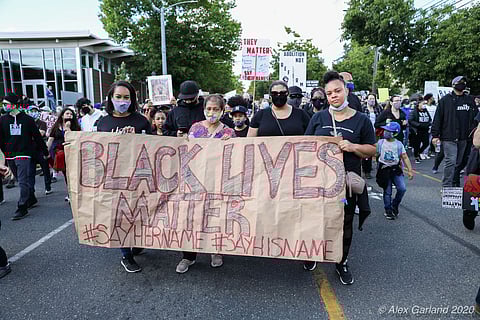
Our communities deserve to be more than reduced to a hashtag or a talking point. We deserve mental health care, support navigating hostile and often re-traumatizing systems, access to funeral and burial expenses, medical treatment, and more. We deserve to be treated like human beings.
In response to these community needs, I've dedicated the last five years of my life to creating permanent offices in Seattle and King County to both address the lack of police accountability and create a pathway to healing by way of direct resources. The Seattle Affected Persons Program (APP) was intended to meet all of these needs. The obstacles have felt insurmountable, and the workgroup intended to study such an office was ultimately obstructed, but I was successful in passing two pieces of legislation in the Seattle city budget in 2023 and 2024.
In 2023 we sought to create a workgroup, led by victims and their immediate family members, to determine how the APP would operate. However, former Seattle City Councilmember Teresa Mosqueda placed the program under the purview of the Office of Police Accountability (OPA), and the OPA subsequently refused to allow us to convene for months. After attempting to move the program to the general Seattle City Council, former Mayor Bruce Harrell pulled the program out from under us, handing it over to the federal monitor, against our wishes and the legislation, for an audit that never saw the light of day.
In 2024 we transferred the full $100,000 of unspent funds in the APP to the Human Services Department (HSD) through a fiscal sponsor. This marked the official end of the program and it was cut for a second and final time.
Determined not to give up, I then launched a campaign to create the APP by way of a citywide initiative, but ultimately did not feel I had enough community support to move forward.
A New Mayor Could Mean a Second Chance for Victims
When you are harmed by law enforcement, even if you have some resources to spare, you can still be preyed upon by the system. Many victims have had money stolen by attorneys, while others have felt exploited by organizations, both taking advantage of a lack of community support and awareness. Creating the APP wasn't just about material support but forming a trusted network that was both trauma- and victim-informed and didn't exploit or take advantage of us during one of the most difficult times of our lives.
With a new mayor recently sworn in and newly elected councilmembers in city hall, I am cautiously optimistic that the fresh slate of elected officials will finally listen to people directly impacted by police violence. They can show they are taking our concerns seriously by creating sufficient permanent resources specifically for victims and their families to finally stop the cycle of violence initiated by police brutality.
Either way, I will continue to speak out and advocate for change on social media and my Ko-fi blog, create murals for victims for communal healing, and engage in all the other ways I can help to create support.
Together, let's put to task organizations that say they are against carceral violence and elected officials who say they are for the people. Let's shine a light on a subject often left in the dark, the realities victims and families face alone. I urge you, reader, to join me in that fight.
The South Seattle Emerald is committed to holding space for a variety of viewpoints within our community, with the understanding that differing perspectives do not negate mutual respect amongst community members.
The opinions, beliefs, and viewpoints expressed by the contributors on this website do not necessarily reflect the opinions, beliefs, and viewpoints of the Emerald or official policies of the Emerald.
Castill Hightower is an activist directly impacted by police violence in Seattle after her brother, Herbert Hightower Jr., was shot and killed by Seattle police. She continues to fight for justice for Herbert, other affected families and survivors of police violence, as well as for a multitude of social issues.
No Paywalls. No Billionaires. Just Us.
We're building a newsroom rooted in community, not corporate backing. Help us raise funds to hire our first-ever full-time reporter and grow our capacity to cover the South End. Donate today.

