
COLUMN | Seattle Knows Public Safety Takes More Than Police. Why Not Fund It?

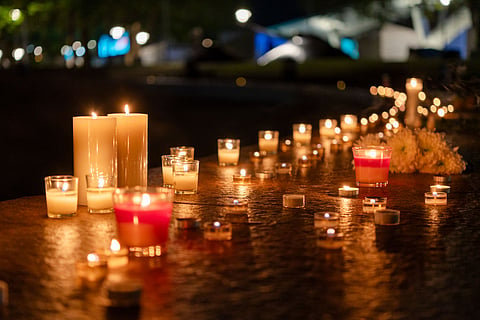
Three people were killed and four others wounded when gunfire erupted at the Bite of Seattle on July 26.
Since the shooting, Seattle's debate has focused on what went wrong in the city's response. Discussing whether more officers would have prevented the shooting, Seattle's interim police chief, Andre Sayles, said something that should have shattered conventional notions about public safety: "If we had 100 officers, would that have prevented it? I'm not sure."
Then came the kicker. Sayles said directly, "We can't prevent the shootings …"
The logic behind Sayles' admission is hard to argue with: If water is pouring into the house, you can hire a hundred people with mops, but if you want the flooding to stop, somebody has to turn off the faucet.
The stakes of the debate over the Bite shooting and public safety are not abstract. Ashley Whitehead, Carlos Israel Sanchez Villalba, and Junior Cee Niko Semo lost their lives.
I can only imagine the terror at the Bite, but I know something about the fear when gunfire erupts. As a Garfield High School student in 1995, I was eating lunch when a student opened fire just outside my classroom, wounding two classmates in the hall. I thought I was about to die. That experience has kept me searching for ways to prevent gun violence.
I didn't have it on my 2026 bingo card that Seattle's police chief would make a clear case in favor of reimagining public safety beyond policing. His admission echoes a core argument advanced by abolitionists and racial justice organizers: Policing responds to violence; it doesn't create the conditions that prevent violence in the first place.
Despite the chief's admission, Mayor Katie Wilson's proposed budget would increase police spending by about $68 million, to $556 million. That is more than three times the budget's $183 million in ongoing investments for unhoused people. To her credit, Wilson has argued that public safety requires "prevention, intervention, and upstream investment," and her budget does make important increased investments in those areas. Still, police spending dwarfs Seattle's dedicated investments in violence prevention and alternative responses.
The city has yet to answer the question implied by the chief's admission: If police only respond after violence happens, what actually keeps it from beginning?
Alternatives Already Exist
Seattle doesn't have to invent prevention infrastructure; much of it exists. Community Passageways uses trusted community members to interrupt conflicts and connect people to housing, jobs, education, and mental health support. CHOOSE 180 provides diversion, mentorship, counseling, and alternatives to prosecution. Seattle's Teen Life Centers offer after-school and late-night programming, while the Seattle Youth Employment Program provides paid internships and career pathways.
The Wilson administration has begun investing in this approach. Her gun violence plan funds community violence intervention, after-school programs, and youth mental health services, while newly implemented universal free school meals guarantee Seattle Public Schools students free breakfast and lunch.
Under Wilson, Seattle is making far greater use of CARE (Community Assisted Response and Engagement), which sends civilian behavioral health professionals to eligible 911 calls and connects people to services instead of defaulting to armed police. CARE Chief Amy Barden said utilization doubled from about 40% under Bruce Harrell to 80% under Wilson.
The problem is not that Seattle doesn't know what prevention looks like. The problem is what we choose to fund and build at scale. The proposed city budget would add 66 police positions while leaving 14 authorized CARE positions vacant. Why not fill them, expand 24/7 civilian response, and give CARE the resources to connect far more people to housing, treatment, transportation, and emergency assistance?
If we want to understand what prevents violence, we have to look beyond the moment a gun is fired to the conditions shaping people's lives long before then.
—Jesse Hagopian
Other cities show what a more fully developed civilian response system can look like. Durham's HEART teams, Albuquerque's Community Safety Department, and Toronto's 24/7 Community Crisis Service connect people to care and follow-up services, including treatment, housing support, transportation, and ongoing case management. Seattle should expand CARE's reach, hours, and capacity to match these cities' programs.
The Solidarity Budget coalition explained the contradiction: "The Mayor has acknowledged the need to invest in evidence-based solutions to address violence and create public safety … but … there could have been so much more money for these vital investments." Seattle artists are making that concrete: A new petition calls for redirecting $8 million of the proposed $68 million police budget increase into arts and cultural programs. That should be the beginning, not the ceiling. What would it look like to redirect much more of the increased police spending into youth jobs, violence interruption, mental healthcare, community centers, and civilian crisis response?
Voters have repeatedly stepped in to fund the kinds of upstream investments city budgets too often leave under-resourced: More than 62% in King County supported Best Starts for Kids in 2021, and 80% in Seattle approved the Families, Education, Preschool and Promise Levy in 2025. Why don't city spending priorities reflect the same urgency?
Chief Sayles acknowledged the limits of what police can accomplish. Seattle should take that admission seriously — not as an excuse to give up on safety, but as an invitation to invest more deeply in what can actually produce it.
Hopelessness Is a Public Safety Issue
If we want to understand what prevents violence, we have to look beyond the moment a gun is fired to the conditions shaping people's lives long before then.
Seattle is awash in wealth, but that has not translated into security for everyone. The Seattle area has 53,100 millionaires, 127 centi-millionaires, and 11 billionaires, yet nearly half of King County renters are rent-burdened and about 2,300 Seattle Public Schools students have been unhoused.
Crushing inequality creates stress and alienation. Research gives us reason to take inequality seriously: Studies show income inequality combined with concentrated disadvantage strongly predicted homicide, while a national study linked youth firearm deaths to reduced social investment, lack of economic opportunity and safe spaces, and hopelessness.
None of this means economic hardship automatically produces violence. Seattle's homicide-free June — the first time in 56 years the city went a full month without a murder — is one reminder. The overwhelming majority of people struggling to pay rent aren't violent. And some of the world's worst violence — war, occupation, and state violence — is carried out by wealthy people and governments.
Prevention means neither blaming poor communities for violence nor ignoring the conditions that contribute to it. This is also a racial justice issue: Black and brown communities too often face overpolicing and underinvestment. Public safety requires more progressive revenue for upstream investments. Wilson's budget explicitly declines to increase the JumpStart tax on large corporations.
If Seattle wants to prevent the next shooting, not merely respond faster, we should flood the alternatives operating in our communities with the investments needed to build lives of stability, dignity, connection, and hope.
Safety doesn't begin when you hear sirens. It begins when you hear kids laughing outside, music spilling out of the community center, and neighbors greeting one another by name.
Jesse Hagopian is a Seattle-based educator, author of "Teach Truth: The Struggle for Antiracist Education," and serves on the national steering committee of Black Lives Matter at School.
No Paywalls. No Billionaires. Just Us.
We're building a newsroom rooted in community, not corporate backing. Help us raise funds to hire our first-ever full-time reporter and grow our capacity to cover the South End. Donate today.
