
What Safety Looks Like in South Seattle Depends on Who You Ask

Community members in the South End are grappling with a difficult question: What will make the people safer?
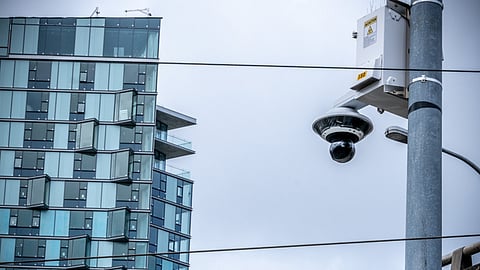
For some, the answer is tied to the shooting deaths of two students at a bus stop outside the Rainier Beach Community Center on Jan. 30, a violent event that has left the community grieving the loss of Tyjon Malik Stewart, 18, and Tra'Veiah Houfmuse, 17, and grappling with persistent gun violence in South End neighborhoods. They point to surveillance cameras as a solution to prevent future deaths and overcome violence.
Immigrant community members and their advocates, meanwhile, express deep concerns over the data collected and used by federal immigration agencies to track and detain immigrants through technology, such as closed-circuit television (CCTV) cameras and automated license plate readers (ALPRs). They want the funding that goes to surveillance to be directed to social programs for the South End.
The result: conflicting views of surveillance, where some want the technology to protect children from gun violence, while others seek to protect privacy and stop community members from being separated from their families.
Yet despite the different perspectives, the end goal is the same: making the South End a safer community. But the road to get there may diverge.
A 'Horrible,' Familiar Feeling
The consequences of gun violence are not new to South Seattle. KUOW examined data of gun-related deaths in King County between 2017 and 2022 and found that Black male youth had the highest death rates. Youth living in South Seattle and South King County suffered the greatest toll from gun violence.
For Angelia Hicks-Maxie, who was born and raised in Rainier Beach, she said the aftermath of the Jan. 30 shooting has been terrible.
"My initial reaction was this also felt familiar, which is a horrible thing to say, but the familiarity of violence in our community has been around for decades," said Hicks-Maxie, the Parent Teacher Student Association president of Rainier Beach High School. "It's not fair for these children to have this level of PTSD, that they're growing up with this level of violence as almost a norm."
Recent data from the King County Prosecuting Attorney's Office shows an overall decrease in the amount of shots fired and nonfatal shooting victims, but youth gun violence remains a concern, with victims under 17 accounting for 15% of all shootings in 2024. In that same year, people of color accounted for 76% of all victims.
Hicks-Maxie said that the recent double homicide has rattled the community because it was brazen and occurred in the middle of the day. And while a teenage suspect is in custody, the shooting has left parents divided about surveillance.
'Those Cameras Keep Communities Safe'
Donnitta Sinclair-Martin lost her 19-year-old son Horace Lorenzo Anderson Jr. in a shooting at Seattle's Capitol Hill Occupied Protest (CHOP) zone in 2020. After his death, she started a nonprofit called We Got Us Moms LLC, where she supports mothers who have lost children to gun violence.
"We are losing our sons, our daughters, and our families to gun violence," Sinclair-Martin said.
Sinclair-Martin supports surveillance. She said that cameras build credibility, eliminate hearsay, and increase safety.
"When we go look at a camera, and we can see the actual person, we might have a better story, a better lens on who this suspect is, who's all involved," Sinclair-Martin said. "They're not going to cure what's going on … but they help resolve some of the issues that's going on in our community. Those cameras keep communities safe."
Surveillance programs such as CCTVs, ALPRs, and the real-time crime center are part of the "Technology-Assisted Crime Prevention Program," which the city implemented last year to address crime rates.
CCTV is a video surveillance camera that captures footage and transmits it to private monitors. ALPR cameras capture and analyze still images of passing vehicles and store identifying details regardless of whether the driver is suspected of a crime. The footage is transmitted to the real-time crime center where analysts view video and data streams to give officers information.
Hicks-Maxie pointed to the surveillance used to arrest the shooter in the recent Rainier Beach shooting to highlight why it's important to have good surveillance. She said she thinks future deaths could be prevented with this technology.
"If you look at this particular case, and you look at the surveillance that they were able to use … you can see that these two families are going to feel like they're going to get justice, because it's not left up to innuendo," Hicks-Maxie said.
SPD arrested the alleged teenage shooter after reviewing a combination of surveillance video from a King County Metro bus and several local businesses, in addition to cell phone records.
For Hicks-Maxie, people shouldn't have an expectation of privacy while in public.
"You want to be private, go home," Hicks-Maxie said. "But when we're in a civil society, and we're in public, there should be no shame to be surveilled in public, because you shouldn't be doing bad things."
'We Can't Trust Them'
Nationwide, there are growing concerns for when — and how — federal agencies and out-of-state law enforcement can access the data collected by ALPR cameras.
A recent report by the University of Washington's Center for Human Rights detailed the different ways data was accessed. At times it was directly accessed by federal authorities, but sometimes it was accessed without a local agency's knowledge. Local law enforcement agencies were also found performing searches on behalf of federal agents. The data breach also targeted other vulnerable groups, such as people seeking reproductive or gender-affirming care.
The CID Coalition has advocated against surveillance and its expansions, arguing that cameras don't prevent crime. Rata Danh, a community organizer with the CID Coalition, said that community members have been wary about the CCTV cameras.
"The limited amount of money that goes into our community goes into these surveillance systems," Danh said. "That money that goes to the [cameras] should be put back into the community … so that we don't have to rely on [other means] in order to get our basic needs met."
Previously, other types of technology, such as ShotSpotter, were considered by the city. That technology notifies police of gunshots through live audio and video. Its use was considered by former Mayor Bruce Harrell before ultimately being scrapped in 2024 after yielding disappointing results, with additional research showing a lack of effectiveness and accuracy.
Mayor Katie Wilson announced on March 19 she would pause the planned addition of most CCTV cameras, except for one near the stadiums for the World Cup. She said she wouldn't turn off any of the current CCTV cameras the city uses, except for one near a reproductive clinic. Wilson also plans to pause the use of ALPR cameras in compliance with a new state law that regulates these cameras.
She intends to conduct an audit on the city’s surveillance system to evaluate the program's effectiveness, but there are concerns with the auditor, New York University School of Law Policing Project, regarding its funding, track record, and connections to current and former SPD leaders. On April 10, dozens protested the mayor's policy at a "Communities Not Cameras" rally at Seattle City Hall.
The Seattle City Council passed legislation on April 1 that would put a 60-day pause on data collection if the data was used for immigration enforcement or would threaten access to reproductive and gender-affirming care.
But do protections like these go far enough for Danh? "Hell no," he said.
Danh said federal agencies can find ways to access data even with the additional protections.
"There's no guarantee, even if the state says they guarantee. There's always loopholes," he said. "We can't trust them."
Shared Consensus
But community members believe there are many ways to keep their neighbors safe.
"Prevention of crime is not just about surveillance, it's also about presence," said Carmen Berrysmith, a staff member at the Rainier Beach Action Coalition (RBAC).
During adolescence, youth are developing their self-identity, added Safiyat Bayo, also at RBAC, and being surrounded by harmful peers and a negative environment can pull someone in the wrong direction.
Building consistent relationships with youth and engaging in intervention and mentorship can help lead youth to better pathways, suggested Berrysmith and Bayo, by allowing them to explore their interests and learn how to de-escalate differences before they become violent.
"People want very fast answers, especially after the shooting," Berrysmith said. "Sometimes just processing the trauma of the situation can also really heighten those emotions, and oftentimes there's not enough time to process and also come up with a game plan."
But it can be hard for community organizations to receive funding to do long-term, preventative work, said RBAC staff, especially when funding tends to go toward short-term concerns, such as technology and policing that responds only after an incident.
In the meantime, Rainier Beach students now have to process the death of a friend or classmate and understand how to handle those feelings, said Hicks-Maxie.
"A little piece of their humanity has been taken from them when they have to learn to cope with this type of trauma," she added. "Now you have to walk past this bus stop on a daily basis, you're having to train yourself to be real resilient in something that is not normative, but they're doing it."
Despite the disagreements over surveillance, there's a shared consensus that people across the South End want to see more long-term investments in the community and that they hope gun violence will no longer be the norm.
For Danh, safety goes back to meeting people's basic needs, which include investment in social programs, housing, and schools.
"Our fight is the same fight," Danh said.
Editor's Note: This story was updated on April 14 to update information about Mayor Wilson's plan for CCTVs and ALPRs.
No Paywalls. No Billionaires. Just Us.
We're building a newsroom rooted in community, not corporate backing. Help us raise funds to hire our first-ever full-time reporter and grow our capacity to cover the South End. Donate today.
